Our editors share some suggestions for the season ahead
Lacey Dunham, Fiction Editor
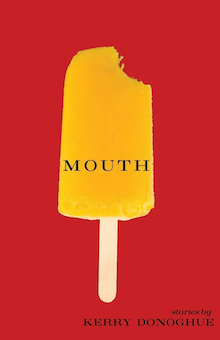
If you feel an encroaching, empty void in your life, you’re not alone. The eclectic cast of Kerry Donoghue‘s debut collection Mouth (Unsolicited Press, 2025) reckons with their choices in an American landscape of overconsumption that has left them feeling an encroaching, empty void. This astonishing collection asks whether we can ever truly find ourselves by placing our wants and desires before our relationships with others.
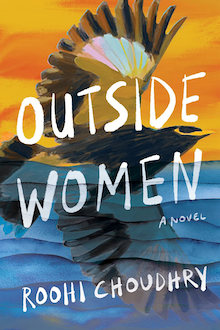
In a stunningly written debut about two migrant women, Roohi Choudhry’s Outside Women (University Press of Kentucky, 2025) follows Hajra and Sita alternating voices and timelines that illuminates the pieces of women’s lives across geographies and timelines, in a novel about the necessity of solidarity across borders and identities in order to shout down injustice.
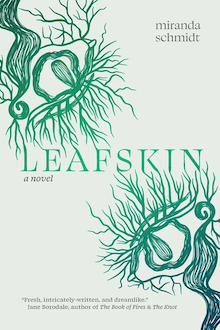
What does love look like in a time of ecological crisis? Miranda Schmidt’s Leafskin (Stillhouse Press, 2025) weaves prose and poetry in a novel that also beautifully attempts to redefine both romantic and familial relationships amidst human infertility and climate collapse. I’ve been calling this a future queer classic that meditates on love, creativity, and nature.
+
Michelle Bailat-Jones, Translations Editor
I’ve been thinking a lot about tumultuous experiences. How a person’s life, across six months or a year, or even within a single day, can swing from one end of the spectrum to another and contain joy, stress, grief, love, sorrow, fear, desire, revelation, and all varieties of the mundane.
So it makes sense that I’ve recently cherished a particularly “multiple” reading experience with Specimen, The Babel Review of Translations. This web magazine is a pure delight, publishing new writing as well as excerpts from classic writers from around the world, in multiple languages that can be visualized side and by side. Reading Specimen reminds me (especially in times of disconnection and disarray) that literature connects people and cultures.
Some recent favorites include “Cockersand Abbey, Morecambe Bay,” written in English by Alison Armstrong but also available in Italian (Daniela Marina Rossi) and Polish (Jerzy Kozlowski); “Park,” written in German by Marius Goldhorn but also available in French (Pierre Testard), English (Caroline Schmidt) and Dutch (Sarah Venema), and the truly amazing “Ganbare! Workshops on Dying,” written in Polish by Katarzyna Boni but also available in English (Mark Ordon), Czech (Michael Alexa), German (Barbara Sauser), Japanese (Ayano Shibata) and Ukrainian (Dzyvenyslava Matiyash).
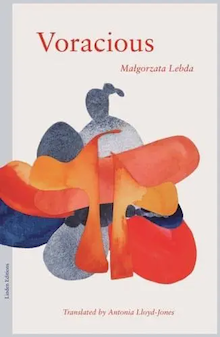
My second recommendation is Voracious by Malgozata Lebda, translated by Antonia Lloyd-Jones. The first book published by the newly founded Linden Editions, this intense and enchanting book reads very much like a dream or a fairytale. (Full disclosure: One of Linden’s three founders is a close friend.) Though it doesn’t follow a traditional narrative arc, the book is busy and alive, proceeding forward through the seasons in flashes of slender, disconnected scenes that explore ideas and questions around illness and grief, dying and living. While its prose rhythms are poetic, and its imagery reaches for the ethereal, the story is filled with tangible details. Set in a fictional village named May, southeast of Kraków and close to the Slovak border, the novel follows a young woman (never named) who has come “home” with a friend named Ann to help her grandfather care for her dying grandmother. I have not read a book in a long time that so deeply connects its characters to one another and to the book’s setting. These people know each other and the land. There is a line very early on that expresses this so eloquently when the grandmother says to the narrator, “You come from my body, too.”
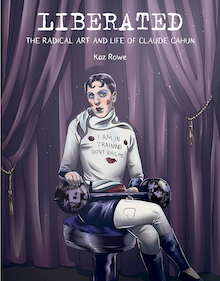
My third recommendation sits just a bit outside the category of translated fiction that I usually try to restrict myself to for this list, but I enjoyed it so much and feel it easily suits readers of Necessary Fiction. It’s a graphic novel called Liberated: The Radical Art and Life of Claude Cahun by Kaz Rowe (Abrams, 2023), about the celebrated French photographer and writer who is experiencing a well-deserved revival. Most of Cahun’s work is slowly becoming available in English (a fact to be celebrated) and Rowe’s overview of Cahun’s life and work—which includes just as much about Cahun’s lifelong partner, Marcel Moore—is thoughtful and gentle while conveying the sharpness of Cahun’s artistic vision.
Finally, here are three recent translations that I have not yet read but am planning to, in July, when I take my own summer vacation: House of Fury by Evelio Rosero (New Directions, 2025), translated by Victor Meadowcroft; We Do Not Part by Han Kang, translated by E. Yaewon and Paige Aniya Morris (Hogarth, 2025); and Wickerwork by Christian Lehnert, translated by Richard Sieburth (Archipelago, 2025).
+
Diane Josefowicz, Reviews Editor
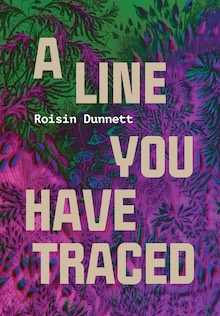
My summer picks are all about escape—from space and time, from stultifying perspectives, from the limited horizon of a single life. Roisin Dunnett’s A Line You Have Traced (Feminist Press, 2025) is an ambitious, braided, speculative novel in which three women widely separated in time and space unknowingly make choices with profound ramifications for the future. Of the three glorious timelines on offer, the most compelling, at least for this reader, is the one that unfolds in interwar London’s East End, as a young couple’s marriage is complicated by the arrival of a charismatic stranger. Altogether the novel prompts questions about chosen family, particularly the way it complicates familiar ideas of ancestry and genealogy. For the London strand, Dunnett draws details from Rachel Lichtenstein’s mesmerizing website, Memory Map of the Jewish East End; as a fan of Lichtenstein’s 1999 cult classic Rodinsky’s Room, an account (written with Iain Sinclair) of the discovery of a hidden garret above an East London synagogue and the mysterious man who lived there, I was immediately hooked by Dunnett’s portrayal of this intriguing lost world.
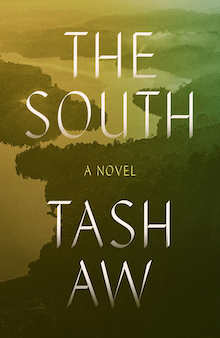
In his hypnotic new novel, The South (FSG, 2025), Tash Aw recounts one dreamy summer in southern Malaysia in which two estranged half-brothers, Jay and Chuan, uneasily join forces to deal with an awkward inheritance: Their father has left the struggling family farm not to Chuan or to Jack but, shockingly, to Jack’s wife. Chuan’s economic precarity—he is the farm’s manager—throws Jay’s secure middle-class existence, as an urban professor, into sharp relief. Meanwhile their children, two adolescent boys, spend the summer squirming poignantly through burgeoning erotic feelings for each other. Weaving class conflict, post-colonial struggle, and ecological devastation, Aw transforms a coming-of-age tale into something more mysterious. Told through a series of beautifully orchestrated shifts in point of view, the story meditates on what it means to be laid open to desire and how that meaning changes depending on where you start from.
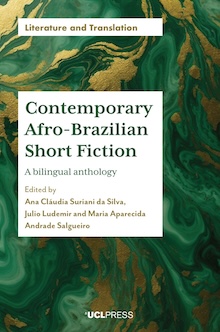
Even though Brazil is home to the world’s largest population of people of African descent outside of Africa, there is little Afro-Brazilian writing in English translation. In response, a trio of editors—Ana Cláudia Suriani da Silva, Julio Ludemir, and Maria Aparecida Andrade Salgueiro—have assembled Contemporary Afro-Brazilian Short Fiction (UCL Press, 2024), a bilingual anthology of twenty-one stories by authors ranging from members of the Quilombhoje group of the early 1980s, which sought to raise the global profile of Afro-Brazilian literature, to up-and-coming new writers like Ana Paula Lisboa, whose haunting “How Far the Sea Goes,” translated by Christina Baum, tells the story of a sea-struck young woman who escapes her childhood home to seek her fortune in Rio de Janeiro and, after finding only disappointment, ultimately returns to the ocean of her dreams.
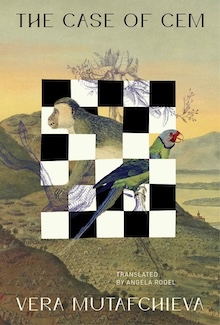
My final pick is The Case of Cem by Vera Mutafchieva, translated by Angela Rodel (Sandorf Passage, 2024). First published in Bulgarian in 1967, at the height of the Cold War, this absorbing Ottoman epic tracks the life of Cem, second son of Sultan Mehmed the Conqueror, who upon his father’s death is forced into exile after challenging his older brother for the throne. Witnesses, fellow travelers, and violent pursuers offer their takes on Cem who, never speaking directly to the reader, remains a cipher. Of the storytellers, the most compelling is Saadi, Cem’s constant companion and lover, who sticks with Cem through every battle and imprisonment. As Cem’s life draws to a close, Saadi feels his impending freedom as a loss of his best self, yet even as he is diminished, he welcomes the chance at a new beginning: “My shared cause with Cem has ended in failure, my love for Cem has also burned out, those two human aims in my life no longer exist, and I am slowly but surely turning into an animal. And like every animal I want my animalistic right to freedom and pleasure—for myself alone.” Striving both to hold onto and to release a cherished companion, he wonders, “Am I obliged to serve a memory?”
+
Steve Himmer, Editor
I don’t subscribe to the idea that “summer reading” means books that are somehow different or “lesser” than more serious reading one might do throughout the rest of the year. Maybe it’s because I spend so much of the year busy with books I’m teaching alongside the writing of my students, but for me summer reading means the books I’ve been looking forward to but haven’t found time for until the semester is over. Though I do tend to kick the season off with something fast-paced and plotty and thrilling, the kind of novel I can sink into and read in long non-stop stretches I don’t have time for while class is in session.
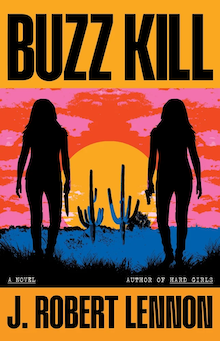
This year, the book I turned to after submitting final grades was Buzz Kill by J. Robert Lennon (Mulholland Books, 2025). It’s a sequel to Hard Girls, returning to the same pair of main characters — sisters Jane and Lila Pool — along with more involvement this time by Jane’s daughter and an old friend in need. It’s a thriller loaded with action, just as you’d want it to be, and it is also humane and challenging in ways that aren’t always the case in a genre that tends toward a conservative confirmation of what we already know about the world and how we think it works. I’ve long thought that Lennon writes women well (not that I’m an expert, but Exhibit A is Subdivision) and here he develops a number of characters who are varied and complicated and diverse as individuals in ways that are crucial to their roles in the story. The relationships between those women are what make the novel so good, because solutions to the high-stakes problems we read thrillers for are as likely to come from a socially struggling teenager as from an expert assassin.

No less thrilling if not a thriller, per se, is Habitat by Catriona Shine (Lilliput Press, 2024), about which I’m going to try not to reveal anything you’d regret knowing too soon, so forgive me if my comments turn cryptic. It’s about an apartment block in Oslo, moving its POV between a handful of residents each of whom experiences unsettling and annoying anomalies over the course of the week in which the novel is set. Objects disappear from where they’re meant to be and reappear somewhere else, solid walls let in inexplicable drafts, and everything in the twinned pair of buildings becomes just a little bit off. An irresistible set up, reminding me in some ways of the architecturally-informed novels of Will Wiles and Adrian Duncan — though Shine, no coincidence an architect herself, isn’t doing anything derivative here. Habitat is so much more than its premise because at the moments I thought I could see where things might be headed, they went somewhere else, and that somewhere else was always richer, subtler, and more deeply moving (and at times infuriating, because of how tragically believable these characters are). The novel left me both satisfied as a reader and impressed as a writer, and along with both of those successes it made me think about the nature of community, how we maintain it, and what we owe to those people and places with whom we form it whether by intention or coincidental proximity.
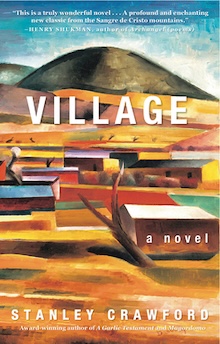
Another novel that had me thinking about the nature of community and how we represent it in fiction was Village by Stanley Crawford (Leaf Storm Press, 2017). I’m cheating a little with this one, in a list of recent books, because it was published a few years ago but the author passed away last year and has been on my mind as I’ve returned to his work in the following months. This later novel is similar to Habitat in some ways, moving among a number of POV characters as it explores their social and familial entanglements within geographic constraints, but set as it is in a poor, rural New Mexico settlement it is also thick with landscape and a strong sense of place that won’t surprise anyone who knows Crawford’s writing, particular his nonfiction books about garlic farming and water rights. There’s an essay in his 2003 collection The River In Winter in which he considers what it might mean to write “a village novel,” so when I saw that he later tried to so I got myself a copy as soon as I could.
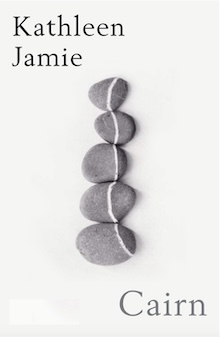
Finally, I may be cheating again but I want to say a word for Cairn by Kathleen Jamie (Sort Of Books, 2024). Already a favorite essayist and poet of mine, this slim book from last year is a combination of poetry, short essays, prose poems and/or fictional sketches — that lack of definition or consistency, I’d argue, being the point. It’s a book in search of a way to write about and think about the complexity and embeddedness and entanglement of what I’ve heard scholars in a variety of fields refer to (if I’ve understood them correctly) as “wicked problems,” environmental and political and otherwise. Cairn is a book that embodies its concerns and its question in form and style and content none of which can be teased apart. And it’s a book you might want to stick in a pocket or bag to read and reread wherever you might be in the world. I know I have.