Whiskey Tit, August 2025
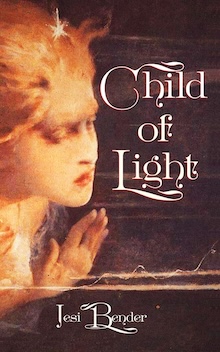
An ode to language and memory, Child of Light is an experimental historical novel that is nominally about the arrival, in the nineteenth century, of widespread electrification in the United States but is also, and more deeply, about the competing claims of science and spirituality as ways of understanding reality.
After being apart from her father and brother for a year, Ambrétte Memenon and her mother reunite with them in Utica, New York. The Memenon family has been fractured, and now that they are back together, Ambrétte tries to reconnect them. From this starting point, the novel focuses on key moments that deepen the mystery surrounding Ambrétte and cause further rifts in the family. Her father, Thales, develops a relationship with Lucian Gaulard, a scientist, and there is an incident with a group of Italians that leads the family to America, a journey that Ambrétte’s infant sister does not survive. Another pivotal moment involves her brother, Georges, at the Forest Hills cemetery. Lastly, the uncertain fate of her mother, along with Ambrétte’s fight for her own survival. From the start, Bender makes the stakes plain:
For Ambrétte Memenon, the crescendo happened in her thirteenth year. Thirteen would be a rapid succession of events that would come to define her: one with Georges at Forest Hill, one when she found out about Papa and the Italians, and, lastly, when Ambrétte witnessed her Maman’s final ecstasy, mouth agape and eyes rolled back to reveal the whites underneath, like a saint in the midst of their deifying torment, writhing terribly in the middle of her deep, dark velvet deathbed.
Ambrétte already has a fragile relationship with Thales, an electrical engineer. He only speaks French, and Ambrétte has a limited understanding of the language. Her brother was once a childhood companion but is now obsessed with becoming a man, repeatedly warning her to stay away from their mother and insisting her focus should be on fulfilling her duty to get married. Ambrétte’s mother, Agathe, is a spiritualist who often falls ill and remains in bed for days. Agathe hopes to use her daughter as a medium to ingratiate the family with prominent community members.
Child of Light is set in the late 1800s, during the height of the spiritualist movement and a time when electricity was becoming increasingly available to the public. A conflict between science and spirituality drives the broken relationships within the Memenon family. Thales is solely focused on electrical innovation, even if his obsessive pursuits hurt his family. Agathe yearns to communicate with the dead, especially her brother and her infant daughter. More than anything, she uses spiritualism to regain control over her life and connect with a community of women. Despite being beautiful, charismatic, and having family wealth, she remains at the mercy of her husband’s whims. Her life unfolds with little room for what she wants because of her husband’s decisions.
Ambrétte often eavesdrops on her parents, but since they only speak to each other in French, she struggles to understand their highly charged arguments. Mixing Ambrétte’s thoughts with her mother’s words, Bender shows how Ambrétte actively pieces together the fragments she overhears in an attempt to decipher a language she does not know well:
[Ambrétte loses the words as they pour out like a steady thread from Maman’s throat—what she misses is Maman saying “You realize that your failures become my failures. And I was not raised to be accustomed to (Ambrétte lost the sound but she assumes it was échec— whatever that meant). But now I have nothing outside of you and this house that you’ve built. Every thing you break—every hope, every promise, every opportunity— it breaks me doubly. Because a woman doesn’t have her own life once she’s married—her life is subsumed by her husband’s. And then it’s the childrens’. Ashes upon ashes, it’s been—to always be putting out your fires.”]
While novel’s beginning suggests that Ambrétte’s attempts to forge connections among her family members could lead to a new start for the family, this hope slowly burns away as the novel becomes increasingly dark. Ambrétte is ignored by her father and tormented by her brother. After promoting Ambrétte’s clairvoyance to other women in their new home, Ambrétte’s mother, initially the only family member paying attention to Ambrétte, finally abandons her when a séance doesn’t go as planned.
As the novel continues, Ambrétte becomes more isolated and her grip on reality more tenuous. Several times, she finds herself trapped in a coffin or grave. The second time this happens, she is pushed into a burial plot in the ground by her brother and left there:
The hole she found herself in was at least a foot-and-a-half taller than she was. It was almost a perfect rectangle and, besides herself, was completely empty. Nary a rock or a branch to be found. So, with her nails and the tips of her shoes, Ambrétte carved out holds so that she could scale the side of the grave and pull herself onto the lawn.
After this, the novel shifts from a mostly clear reality to a fever dream, both for Ambrétte and the reader, in which reality is distorted. I found myself at times unable to find my footing, rereading passages in order to distinguish events that were really happening from those that might have been hallucinations or manic episodes. Bender places the reader directly in the mind of Ambrétte as her world warps around her and grows increasingly grim. There is no reconciliation between the scientific and spiritual perspectives. Each pulls Ambrétte further into confusion with no reconciliation between her father’s science of energy and her mother’s spiritualism.
Ambrétte’s most meaningful and honest relationship is with another girl, Celeste, who lives at an orphanage. They often cannot be together, so they communicate via letters left in a tree, telling each other stories and sharing books. While they can connect through language and stories, Ambrétte is less successful with her father. Alert to the ways in which language can alienate as well as connect people, Bender traces Ambrétte’s struggle to converse with him, showing how Ambrétte tries to make sense of his French in English.
Bender also includes ephemera gathered by Ambrétte, such as music sheets, fragments of stories and poems, and articles. The reader sifts through all the bits and pieces, understanding them altogether as another of Ambrétte’s attempts to bring her family together and ultimately make sense of her reality. As Ambrétte observes, “You can collect many deaths in one life.” In the end, the place no one can reach—the safest place for Ambrétte to be—is in the deepest part of her own mind. In Child of Light, Bender provides a magnificent example of immersive historical fiction that stretches the genre beyond its traditional form.
+++
An author from Upstate New York, Jesi Bender is the author of Dangerous Women (2022), Kinderkrankenhaus (2021), and The Book of the Last Word (2019). Child of Light is her second novel.
+
Emily Webber has published fiction, essays, and reviews in the Ploughshares Blog, The Writer, The Rumpus, Hippocampus, and elsewhere. Learn more at emilyannwebber.com.