Our Research Notes series invites authors to describe their process for a recent book, with “research” defined as broadly as they would like. This week, Joanna Howard writes about Porthole from McSweeney’s Publishing.
+
On travel and the importance of place in my novel Porthole
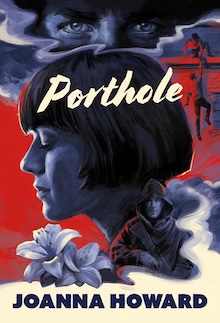
My novel Porthole took longer to write than any project I have worked on previously: the earliest scraps of it emerged fifteen years ago, or more, but it was interrupted by a couple of other books, which in their scope, were either more manageable or more immediate. Porthole follows a filmmaker, Helena Désir, at a crisis point in her career: the death of an actor on the location of one of her projects leaves her caught between obsessive thoughts of her past and paralysis in moving toward any artistic future. Helena suffers from insomnia, and while I found it easy to write the mania and perceptive dissonance of not-sleeping, as a sufferer myself, for the philosophy of insomnia, what I think of as the theory of the practice, or a study of it as a discipline, I needed to get outside myself. There is often a serendipitous way that things find their way into a book, serendipitous or hapless, perhaps, since for at least three of the years that I was writing Porthole, I was in a community reading group attempting all seven volumes of Marcel Proust’s In Search of Lost Time and so at many points along the way, I turned to Proust as a guide (we all need them: when you are in the inferno of a novel, it is necessary to look for a Virgil), as the most famous of literary insomniacs. Serendipitously, he also happens to be one of the great writers of place, but places which are all at once geographic, historic, and imaginary. “Place Names, The Place” and “Place Names, The Name,” two of his section titles which are also two philosophical approaches to place, are alluded to in Porthole, but moreover, these places began to drive the book, and it is hard for me even now to remember which came first for my character: her places, or their names, her places, or their memories.
For Helena the places she has filmed, attempted to film, and failed to film are central to her method of creation—often to her detriment—and so, place operates to orient the narration in the book and locate my protagonist in time, but also to drive the plot, much of which is about what went wrong in some of these locations, and how she either dealt with it, or ran from it. Porthole is in many ways a book about what happens when everything catches up to you, and you have to remain stationed in one place and just feel and experience the culmination of a few too many narrow escapes. I didn’t set out to write a travel novel when I began thinking about Helena’s story—I had barely even been anywhere—but a strange marriage between content and practice began as I began to travel more, and found that the more I traveled, the more I wrote.
Given the duration of time that I’ve been living with this character, it is not surprising that I have carried her with me wherever I go. What is surprising to me is how much I have come to rely upon this ‘going’ aspect of my life to provide me with the space to work on writing. Traveling, displaced from the responsibilities of one’s own life, disconnected from mundane demands, or administrative upkeep, allows curiosity and imagination to open up in startling ways. Because much of the traveling I do is to visit friends and family—my partner’s family being equally divided between England and Canada—downtime between meals, early mornings, or nighttime bouts of insomnia became opportunities to steal time for Porthole, and for Helena. Because getting back into the writing of the book each time I’d been away from it was daunting, I relied on immediate surroundings to jumpstart scenes—looking around me, noting the room, the view out the window, the streets I had walked on that morning to find breakfast, etc. There is also something important to me about the way travel—especially if you are trying to do it on the cheap, as I am always, or when you are staying with friends or family—forces you to relinquish control over so many things. As often as not, things are not as you expected, the itinerary can’t be followed, or time simply doesn’t permit. Control—both possessing it and releasing the need to possess it—are core issues for my protagonist Helena as she seeks some balance between a visionary artistic point of view, and one that threatens the autonomy of those around her. Her nomadic, and often escapist existence, is something which my protagonist seems to both fear and crave, and her desire to run, along with her ability to rationalize it, for the purposes of her art, are at the core of her character.
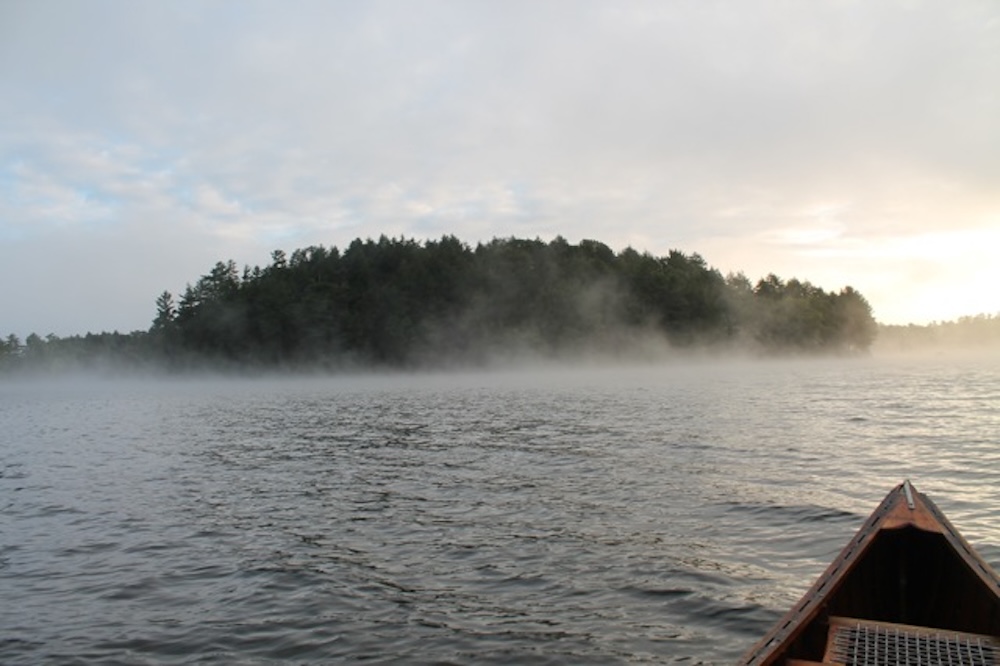
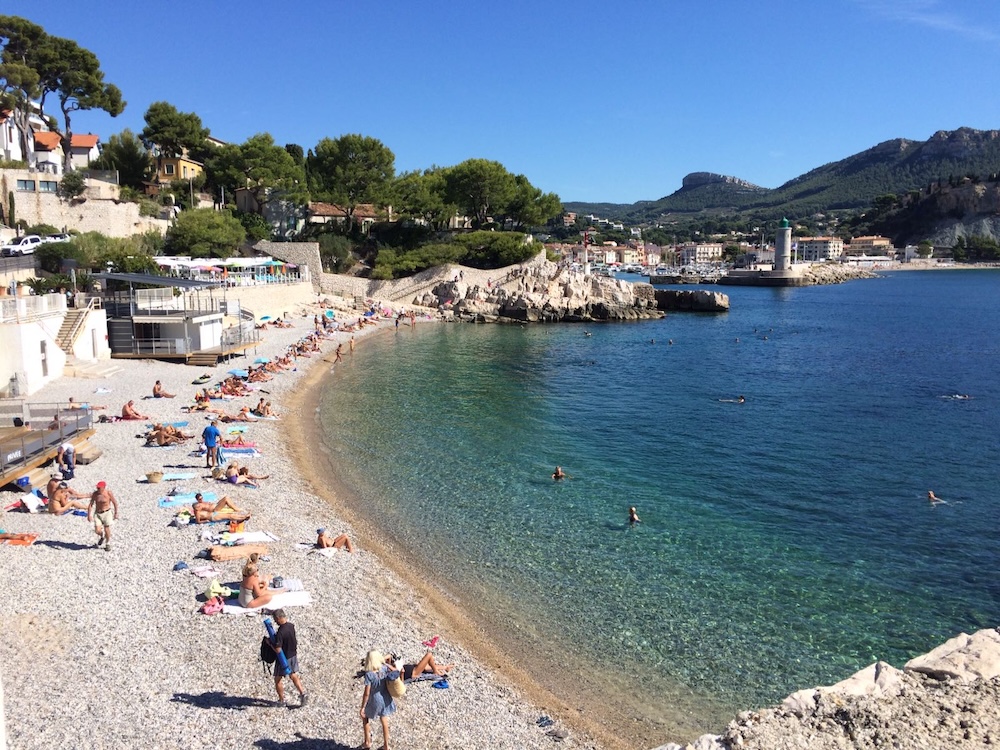
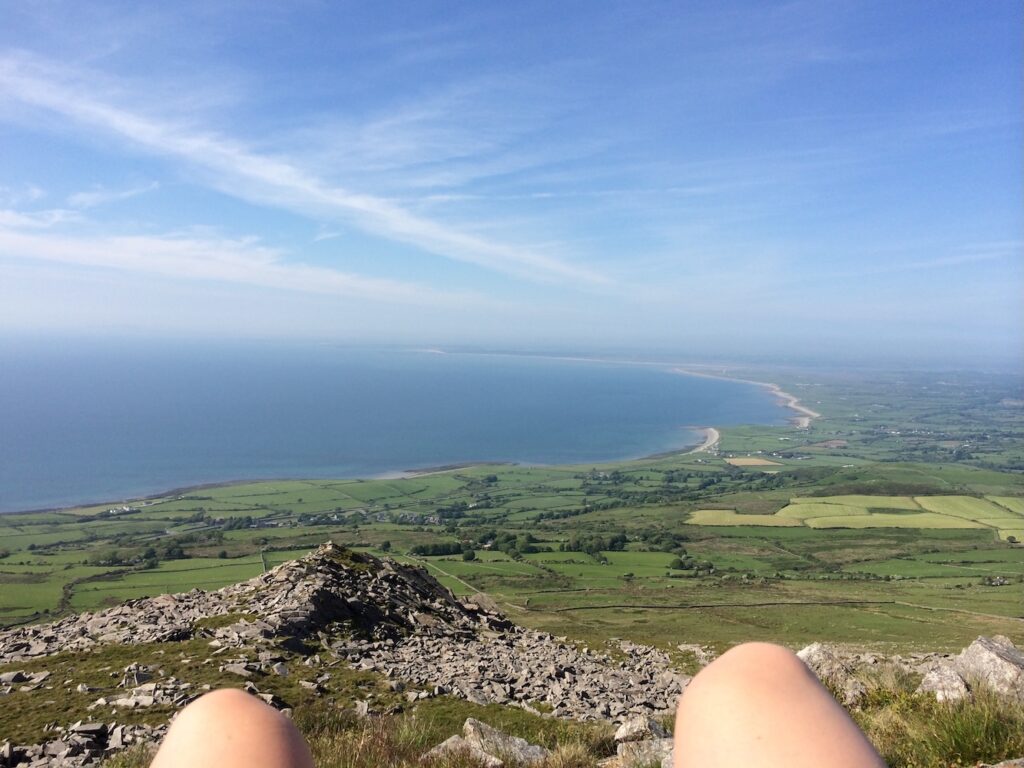
The present tense story of Porthole takes place at a quite fanciful mental asylum called Jaquith House, in an unnamed location which has a little of everything: giant glassy lakes, twisting mountain roads, picturesque villages, and grand seaside hotels. While Jaquith House is a place that I think of as out of time and place, it is also a collage of real places that I have stayed: a friend’s farm in Hudson, NY (formerly owned by Harry Belafonte), a series of small islands in Lake Rosseau in Muskoka, Ontario, the strange ski resort village of Mont-Tremblant in northern Québec were the main informants. The neighboring points Helena visits while on her rest cure, particularly a seaside hotel and beach town where she has a pivotal moment of reflection, and a kind of epiphany—drew on more international locations: Marseille and Cassis, in the South of France (where I vagabonded at an art’s residency years ago) and sites in Cornwall and Devon, where even the briefest of stays ended up informing key pieces in the development of Helena’s career and life. Her backstory was initially driven by a few film sources I had researched, but her character development was ultimately formed by wherever I happened to go, because in going I was also writing for short and intensive bursts. For example, Porto, in Portugal, gave me the setting for one of Helena’s trysts that provides a possible future project, something that suddenly gave her a way to return to working if she chose to do so. A regular walk I took in London when staying with friends, gave me a chapter set at a West End theatre, that introduced new dimensions to an actor character who serves as her main foil throughout the book.
In many ways, what emerged from this method—hapless or serendipitous travel, faithful reliance on a guide whose every fictive gesture reminds us of the ethereal and surreal potential of memory and time—was a protagonist with nomadic tendencies, hallucinatory and colliding memories, and an unmoored personality. This suited the book thematically—the accident that opens the book happens when a boat becomes unmoored—and ultimately conceptually, as I began to think more about the nature of creative production, and the way writers need to be able to sojourn in the material they are working on, and how my encounters with my protagonist were not unlike the annual visits we had with our friends and family in other countries—a experience of rapidly catching up, followed by a lull or gap of awkwardness or silence before suddenly organic exchanges can flow. I needed to be able to miss Helena for periods, and to return to her, to catch up with her memories, and then I was able to just inhabit her world naturally for whatever time I had, knowing that eventually, the visit would be over, and I would be back in real life, teaching, shopping for groceries, going to the dentist. When I was stuck working, and just living, I was anticipating the next escape, which also has some drawbacks. Because I identify as a writer (rather militantly, otherwise, I wouldn’t be able to keep it up), and because writing seemed to happen in the going parts more than the staying-put parts, at times it seems to me this other life is the interloper, perhaps one I am running from. Helena herself seems to run away to a new location anytime her life, especially when her relationships, get tedious or complicated. One of my favorite parts of the book is the long interlude section called “Prawn’s Saga” from the point of view of one of the Jacquith House patients, a man of finance and international business, who tells the story of his life going from place to place so frantically, and so decidedly, that his life rarely can catch up with him. If there is a part of the novel that feels closest to me, it is that strange entr’acte section.
Ultimately, writing this novel has given me a chance to examine some of the aspects of place that are the most philosophical, the most laden—the aspects of how time spent in a place does leave a trace, and shapes emotional responses. What also became clear to me, as I worked on the book, was that none of the places of Porthole could be just one place, but the demands of the novel were that each place, even those that exist somewhere in a ‘real’ were, in the context of this novel, always outside the real, a collision of placeable and unplaceable landscapes. My hope is that the effect is that Helena’s relationship to place, and the places she occupies, will open up the travel imaginary for readers, allowing them to be both transported and transformed, as I have been, and as both my protagonist and my authorial guide have taught me to be.
+++
Joanna Howard is a writer and translator from Miami, Oklahoma. She is the author of the memoir Rerun Era (McSweeney’s, 2019), the novel Foreign Correspondent, and the story collections On the Winding Stair and In the Colorless Round, the latter of which was illustrated by Rikki Ducornet. She also cowrote Field Glass, a speculative novel, with Joanna Ruocco. Her work has appeared in Conjunctions, The Paris Review, Verse, Bomb, Flaunt, Chicago Review, The Brooklyn Rail, and parts elsewhere. She is a Professor of Creative Writing at Denver University.